
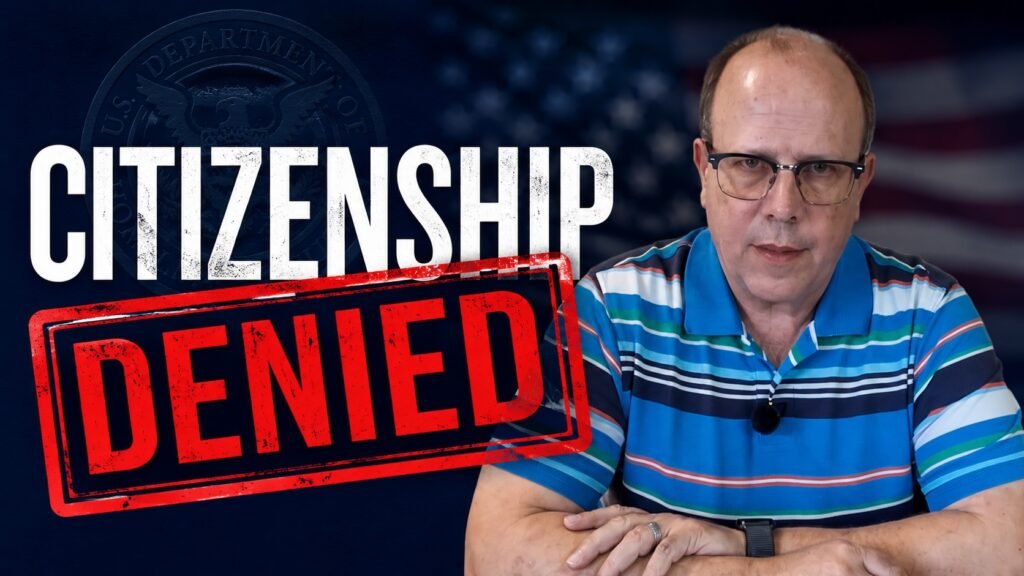
Applying for U.S. citizenship has become significantly more challenging in 2026. Cases that would have been approved just a few years ago are now receiving Requests for Evidence (RFEs) or even outright denials.
Why?
USCIS officers are conducting deeper reviews of applicants’ immigration histories, using more sophisticated technology, artificial intelligence, digital records, and cross-checking previous immigration filings more aggressively than ever before.
If you’re preparing to file Form N-400, understanding these four red flags could save you years of delays—or even protect your permanent resident status.
Why Is USCIS Denying More Citizenship Applications?
For many lawful permanent residents, becoming a U.S. citizen is the final step in their immigration journey.
Citizenship offers benefits that a Green Card cannot:
- Permanent protection against deportation in most situations
- No Green Card renewals
- Greater freedom to travel
- Voting rights
- Eligibility to sponsor additional family members
- Protection against losing permanent resident status because of extended travel abroad
However, according to immigration attorney James G. Martin, the naturalization interview has increasingly become USCIS’s final opportunity to thoroughly reexamine your entire immigration history.
That means officers are no longer reviewing only your N-400 application.
They are reviewing everything.
Red Flag #1: Ghosts From Your Past
One of the most common reasons applicants run into trouble is something that happened years—even decades—ago.
This includes:
- DUI arrests
- Criminal charges
- Convictions
- Prior arrests that were dismissed
- Information omitted during previous immigration applications
Many people believe:
“I already received my Green Card, so that issue is behind me.”
Unfortunately, that assumption can be dangerous.
Why USCIS Looks Back
Naturalization is USCIS’s final opportunity to determine whether your Green Card was obtained lawfully.
Officers review previous immigration filings to identify:
- Fraud
- Misrepresentation
- Omissions
- Inconsistent statements
Even if an issue did not prevent you from receiving permanent residence, failing to disclose it properly—or providing conflicting information later—can create serious problems during the citizenship process.
Technology Has Changed the Process
Modern USCIS investigations no longer rely solely on paper files.
Today’s officers may use:
- Digital government databases
- Fingerprint records
- AI-assisted file reviews
- Criminal databases
- Public online information
If there is any uncertainty about your criminal history, obtaining certified court records and completing a thorough background review before filing can help identify potential issues.
Red Flag #2: The Residency Gap
Many Green Card holders mistakenly believe that because their Green Card is valid for ten years, they may freely spend long periods living outside the United States.
Naturalization law is much more complicated than that.
Physical Presence vs. Continuous Residence
USCIS evaluates two different concepts:
- Whether you maintained your lawful permanent resident status.
- Whether you maintained the continuous residence required for naturalization.
Those are not always the same thing.
An applicant may still possess a valid Green Card while no longer satisfying the continuous residence requirement necessary for citizenship.
Extended Trips Can Reset the Clock
Long absences may create significant issues.
Generally speaking:
- Absences exceeding 180 days may require additional explanations and evidence.
- Absences approaching or exceeding one year can have even more serious immigration consequences if proper authorization was not obtained.
In some cases, applicants who return to the United States are surprised to learn that—even though they were admitted back into the country—they may have interrupted the continuous residence required for naturalization.
The result?
They may need to wait several additional years before becoming eligible to apply again.
Before submitting Form N-400, every international trip should be carefully reviewed with an immigration attorney.
Red Flag #3: The Chain Reaction
Your citizenship application does not exist in isolation.
USCIS compares your current application against every immigration petition and form you have previously submitted.
That includes applications filed many years earlier.
Small Inconsistencies Can Become Big Problems
Examples include:
- Different residential addresses
- Different employment histories
- Conflicting travel dates
- Missing information
- Prior answers that contradict current statements
Sometimes these inconsistencies are nothing more than innocent mistakes.
However, when USCIS identifies multiple discrepancies, officers may begin questioning whether the applicant intentionally misrepresented facts.
That conversation can quickly expand beyond the citizenship application itself.
In certain situations, USCIS may even reevaluate whether permanent residence should have been granted in the first place.
Because of that, reviewing prior filings before submitting Form N-400 has become increasingly important.
Red Flag #4: Tax Issues
According to James Martin, tax compliance has become one of the most significant issues affecting citizenship applications in 2026.
Why Taxes Matter
Naturalization requires applicants to demonstrate Good Moral Character (GMC).
USCIS increasingly examines:
- Whether taxes were filed on time
- Whether taxes were paid
- Whether payment obligations were satisfied
- Overall tax compliance
Even when applicants have entered into IRS payment plans, tax problems may still raise questions during the naturalization process.
Late filing, unpaid balances, or incomplete tax records can significantly delay—or in some cases jeopardize—a citizenship application.
For that reason, applicants should ensure that:
- Federal tax returns have been filed on time.
- Payment obligations are current.
- IRS records accurately reflect compliance before applying.
Citizenship Applications Receive More Scrutiny Than Ever
Naturalization has always required careful preparation.
In 2026, however, USCIS is reviewing applications with greater scrutiny than many applicants have experienced in previous years.
Rather than viewing the N-400 as a standalone application, officers often evaluate the applicant’s complete immigration history, travel records, tax compliance, and prior filings before making a final decision.
Preparing your application carefully before filing is often far easier—and far less expensive—than trying to correct problems after receiving a denial.
Speak With an Immigration Attorney Before Filing
If you have:
- Prior arrests or criminal history
- Long absences outside the United States
- Multiple immigration filings over the years
- Tax issues or IRS payment plans
- Concerns about your eligibility for naturalization
a legal review before filing your citizenship application may help identify potential problems and reduce the risk of unnecessary delays or denials.
At the Law Office of James G. Martin, P.A., Sarasota immigration lawyer, we help clients across the United States evaluate their eligibility for U.S. citizenship and prepare strong naturalization applications.
Contact our office today to discuss your case before you file your N-400 application.